
Why physical discomfort matters in separation anxiety training, and what research tells us about the connection between pain, stress and behaviour.

Your dog is young, active and loves running around. They happily chase a ball, jump onto the sofa and zoom around the garden.
Surely they can't be in pain?
Or perhaps your dog has recently had a veterinary check-up and nothing concerning was found.
So, we can rule out pain, right?
Not necessarily.
Dogs can be remarkably good at continuing with everyday activities despite experiencing discomfort. And pain doesn't always look the way we expect it to.
But here's something particularly important if your dog struggles with separation anxiety: physical discomfort can influence how well your dog copes with being left alone.
In fact, research suggests that pain and behavioural problems in dogs are more closely connected than many people realise.
The connection between pain and anxiety in dogs
Pain isn't simply a physical sensation. It also has an emotional component.
Think about how you feel when you have a headache, an upset stomach or persistent back pain. You might become more irritable, find it harder to concentrate or feel less able to cope with everyday challenges.
Dogs can experience similar difficulties.
When a dog is uncomfortable, their ability to cope with stressful situations may be reduced. Something they could normally manage might suddenly feel much harder.
And importantly, the relationship between pain and anxiety can work both ways.
Pain can increase stress and anxiety, whilst anxiety can influence how pain is experienced.
When a dog becomes anxious, their body responds. Muscles may tense, physiological arousal increases and the nervous system becomes more alert to potential threats.
In some circumstances, prolonged stress and heightened sensitivity within the nervous system can amplify existing discomfort.
This doesn't mean anxiety always makes pain worse. Acute stress can sometimes temporarily suppress pain perception. However, persistent anxiety and pain can reinforce one another, creating a difficult cycle.
For a dog experiencing separation anxiety, this may mean that underlying physical discomfort makes being left alone even more challenging.
What does the research tell us?
One particularly interesting piece of research was published in 2020 by Professor Daniel Mills and colleagues. Their paper, Pain and Problem Behavior in Cats and Dogs, examined the relationship between painful conditions and behavioural problems in animals referred to specialist behaviour services.
The findings were striking. Across different specialist referral caseloads, painful conditions were suspected in approximately 28% to 82% of behavioural cases.

The researchers suggested that around one-third of referred behavioural cases could conservatively be associated with some form of painful condition, with substantially higher figures in certain specialist clinics.
That's a significant number of dogs whose behaviour may be influenced by physical discomfort.
There is, however, an important distinction: these figures relate to behavioural problems generally, not specifically to separation anxiety. They also come from specialist referral populations rather than the general dog population.
Nevertheless, they highlight why considering pain should be an important part of any behavioural assessment.
Mills and his colleagues also described several ways in which pain and behaviour can be connected:
Pain may directly cause a behavioural change.
An underlying painful condition may contribute to an existing behavioural problem.
Pain may intensify behaviours that were already present.
Additional behavioural changes may develop alongside the pain.
In other words, pain doesn't necessarily have to be the original cause of a behavioural problem to make that problem considerably worse.
What does this mean for dogs with separation related behaviour problems?
A dog with separation anxiety, for example, experiences distress when separated from their attachment figure or is left alone (“isolation distress”). Successful separation training involves gradually helping the dog learn that being alone is safe, working at a level they can comfortably manage.
But imagine trying to learn something difficult when you're already feeling physically uncomfortable. You might struggle to concentrate, become frustrated more easily or find yourself less resilient when something stressful happens.
For dogs, underlying discomfort may have a similar effect. A dog who was previously comfortable being alone for 20 minutes might suddenly struggle after five. Another dog might find it difficult to settle during absences, even though their training plan has been carefully adjusted.
And some dogs may show inconsistent progress, with apparently good days followed by unexpectedly difficult ones. Of course, these changes don't automatically mean a dog is in pain. Separation anxiety is complex, and progress can be influenced by many factors.
But physical discomfort is one possible contributing factor that deserves consideration, particularly when progress becomes unexpectedly difficult.
Medical conditions can contribute to separation-related problems
In a review published in Veterinary Clinics of North America: Small Animal Practice in 2024, veterinary behaviourist Dr Hagar Hauser examined the relationship between separation-related problems and physical disease.
The review highlights that various medical conditions can:
Produce symptoms that resemble separation-related problems.
Make existing separation anxiety worse.
Contribute to setbacks during behaviour modification.
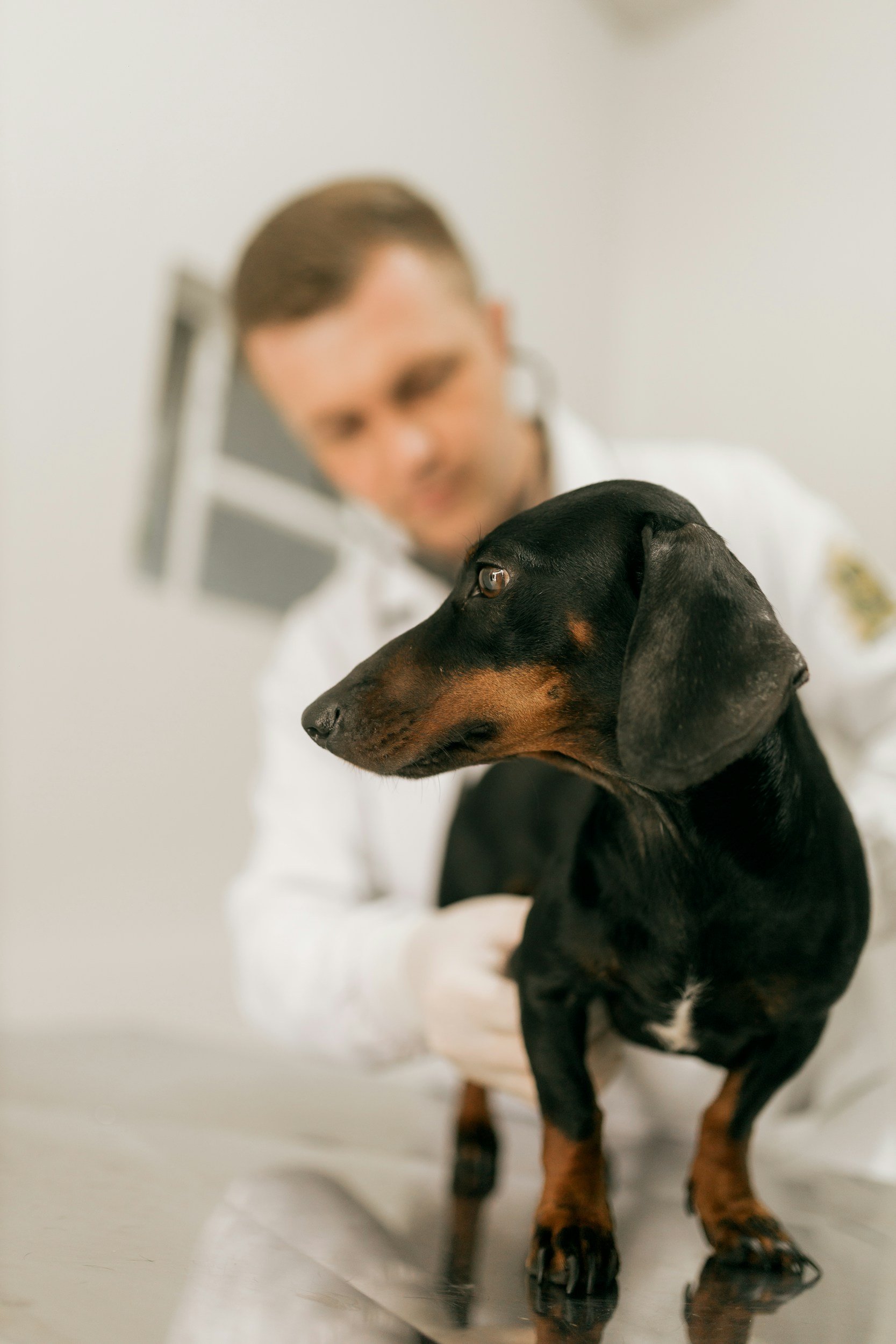
These include musculoskeletal, neurological, gastrointestinal and dermatological conditions. This is particularly relevant because not all physical discomfort is immediately obvious.
For example, a dog experiencing gastrointestinal discomfort may find it harder to relax. A dog with an orthopaedic problem may struggle to find a comfortable resting position. Persistent itching or skin irritation may also interfere with sleep and relaxation.
None of these conditions automatically causes separation anxiety. However, they may contribute to a dog's overall stress levels and influence their ability to cope with being alone.
But my dog runs, jumps and plays. Surely they're not in pain?
This is one of the most common misconceptions about pain in dogs. We tend to associate pain with obvious signs such as limping, crying or refusing to move. But dogs don't always communicate discomfort so clearly.
Some continue running, jumping, playing and enthusiastically greeting their favourite people despite experiencing pain. Excitement and motivation can temporarily override or mask signs of discomfort.
A dog might happily chase a ball but struggle to calm down or get comfortable afterwards. Another might continue going for walks but become restless when trying to settle.
And young dogs aren't automatically protected from pain. Developmental orthopaedic conditions, injuries, gastrointestinal problems and other medical issues can affect dogs at any age.
Being active doesn't necessarily mean being pain-free.
What if my vet has already examined my dog?
A veterinary examination is an important starting point when investigating potential pain or medical problems. However, identifying the source of discomfort isn't always straightforward.
Some conditions produce intermittent symptoms. Others may be difficult to detect during a routine physical examination, particularly when the dog isn't showing obvious signs at the time.
Professor Mills and colleagues emphasise the importance of considering possible pain even when a specific physical abnormality hasn't been identified. Depending on the individual dog and their symptoms, further investigations or a carefully monitored pain relief trial may be appropriate under veterinary supervision.
This isn't about questioning your vet's expertise. It's about recognising that some conditions require additional investigation and that observations made at home can provide valuable information.
Come prepared for your vet visit: videos of how your dog moves, changes in behaviour, appetite, sleep patterns etc or difficulties settling can be particularly useful to share with your vet.
Signs that physical discomfort might be affecting your dog
Not every dog experiencing pain will show obvious symptoms. However, changes worth paying attention to include:
Difficulty settling or frequently changing resting positions.
Changes in sleep patterns or increased restlessness.
Reluctance to jump, climb stairs or perform previously comfortable movements.
Changes in or generally lack of appetite, digestion or toileting habits.
Excessive licking, scratching or attention to particular body areas.
Changes in posture, gait or movement (you may have always felt that your dog moves oddly, that for example hip movement is rigid).
Increased sensitivity to handling or being touched.
Unexplained changes in behaviour, including increased anxiety or irritability.
These signs aren't proof of pain, and some can have other explanations. But they may provide useful clues when considered alongside a dog's medical and behavioural history.
Why this matters for separation anxiety training
As a Certified Separation Anxiety Behaviour Consultant, my approach to training is based on helping dogs feel safe and comfortable when left alone. That means working at the individual dog's pace, observing their behaviour carefully and adjusting training plans according to how they're coping.
But behaviour doesn't exist in isolation.

A dog's physical health, emotional wellbeing, environment and previous experiences can all influence how they respond to training. If a dog suddenly starts struggling with absences they previously managed comfortably, or their progress becomes consistently difficult despite appropriate adjustments, I believe it's important to look beyond the training plan itself.
Could there be an underlying medical issue?
Has something changed in their physical comfort?
Are they sleeping well, eating normally and moving comfortably?
These are important questions. And when physical discomfort is suspected, working alongside a veterinarian becomes an essential part of supporting the dog.
Sometimes, addressing an underlying medical problem can make a meaningful difference to a dog's ability to participate in behaviour modification. That doesn't mean treating pain will automatically resolve separation anxiety. A dog will still need a carefully structured desensitisation programme.
But it can help remove an additional source of stress that may be making the process more difficult.
Looking at the whole dog, not just the behaviour
Separation anxiety training isn't simply about teaching a dog to tolerate longer and longer periods alone. It's about understanding what that individual dog needs to feel safe. And sometimes, the reason a dog is struggling isn't immediately obvious.
It may involve their environment, previous experiences, changes in routine, their general emotional wellbeing or an underlying physical problem. The more we understand about the relationship between physical health and behaviour, the better equipped we are to support our dogs.
Because a dog who feels physically uncomfortable may find it much harder to feel emotionally safe.
So, if your dog is struggling with separation anxiety, particularly if their progress has unexpectedly stalled or regressed, don't overlook their physical health. It might be an important piece of the puzzle.
Need help with your dog's separation anxiety?

At Wolfgang's Way Dog Training, I offer personalised, science-based separation anxiety training programmes designed around your individual dog and their needs.
Together, we'll look at your dog's behaviour, their environment and the factors that may be influencing their ability to cope with being left alone.
If you'd like to find out how I can help, get in touch or book a free introductory call.
Research and further reading
Mills, D. S., et al. (2020). Pain and Problem Behavior in Cats and Dogs. Animals, 10(2), 318.
https://doi.org/10.3390/ani10020318
Hauser, H. (2024). Separation-related Problems and Their Interaction with Physical Disease. Veterinary Clinics of North America: Small Animal Practice, 54(1), 29–42.
https://doi.org/10.1016/j.cvsm.2023.08.003
Mills, D. S., Coutts, F. M., & McPeake, K. J. (2024). Behavior Problems Associated with Pain and Paresthesia. Veterinary Clinics of North America: Small Animal Practice, 54(1), 55–69.
https://pubmed.ncbi.nlm.nih.gov/37743157/