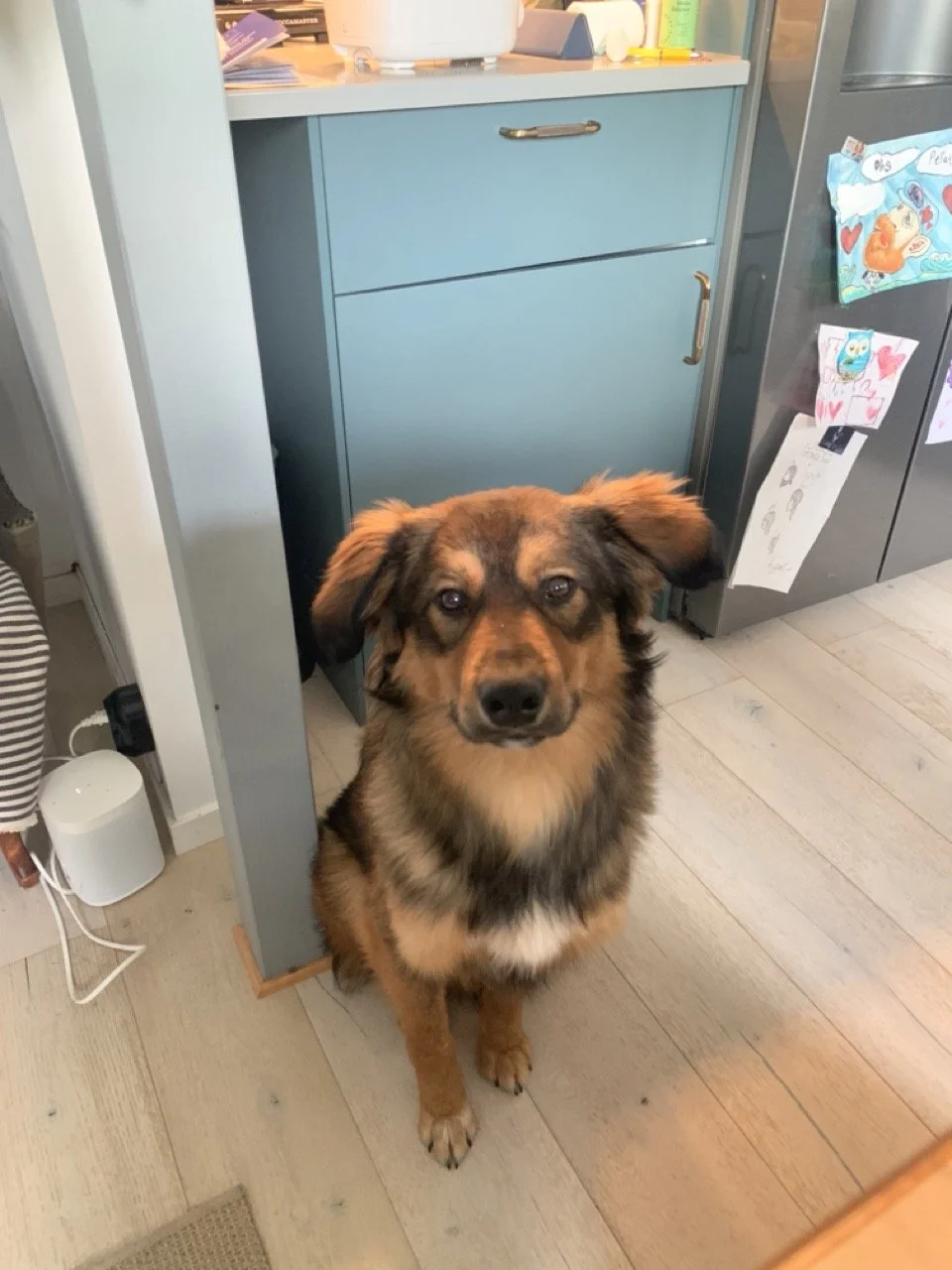

Our new furry bestie Bonzie
We’ve recently brought home our new rescue Bonzie, from Greece. A sprightly one year old mix-of-all-the-furry-best-and-love. He is perfect. And he makes it so very easy for us (considering he’s never lived in a home before, I’m marvelling at him every day, impressed by how he’s settling into his new environment with such ease.
Adopting a rescue dog can be one of the most rewarding things you ever do. It can also be challenging, emotional, and very different from bringing home a puppy or a dog with a known background. From experience, having worked with hundreds of rescue dogs and puppies who came from a breeder: it can really go either way. I’ve worked with adult rescues who were easier to settle than a puppy. So there.
Many dogs coming from rescue have lived complex lives. Some were strays, some grew up outdoors, some were working dogs, and others may have experienced neglect or repeated upheaval. Preparing properly and setting realistic expectations makes a huge difference to how smoothly your dog settles and how confident you feel as their new human.
Below is a practical, kind, and realistic guide to help you support your rescue dog through those early weeks and beyond.
Before You Adopt: Do Your Homework
Before saying yes to a dog, take time to learn as much as you can.
Ask about the dog’s background, age, breed mix, and previous lifestyle
Find out whether they lived indoors or outdoors, alone or with other dogs
Consider what the breed or type (if known) was originally bred to do and how that fits into your life
A dog bred for hunting, guarding, or independent work will have different needs to a dog bred for companionship. Matching those needs to your lifestyle sets you both up for success.

Managing Expectations From Day One
One of the hardest parts of adopting a rescue dog (and perhaps also a puppy, in my opinion) is letting go of expectations.
A dog with a strong prey drive is unlikely to walk calmly off lead around wildlife
Dogs from street or rural backgrounds may find indoor living confusing or overwhelming (at first anyway)
Some dogs appear “fine” at first, only to struggle weeks later once reality sinks in
This is normal. Many rescue dogs go through a delayed stress response as their nervous system slowly realises this new life is permanent.
Bringing Your Dog Home: Slow Is Not a Setback
The journey to a new home is stressful, even if your dog looks calm on the surface. Stress hormones can remain elevated for days or weeks.
In the early days:
Keep life quiet and predictable
Avoid visitors, busy outings, and too much handling
Allow your dog to observe rather than participate
You din’t HAVE to take your dog out for walks right away, it might be too much for them at first.
This settling-in phase is not about training. It is about safety and decompression, and eventually bonding.
Trust Is Built, Not Given
Your new dog does not know you yet. Distance, hesitation, or avoidance is not rejection.

Dogs who have survived without consistent human care are often extremely sensitive to emotional shifts. This helped them cope before, but it means they may need time to learn that you are safe, predictable, and kind.
Your role is to:
Observe rather than rush
Respond rather than react
Let the relationship unfold at the dog’s pace
Learning to Read Your Dog’s Body Language
Understanding canine body language is one of the most powerful skills you can develop.

Common stress signals include:
Yawning, lip licking, panting
Turning the head or body away
Shaking off when not wet
Withdrawal or freezing
More serious signs of discomfort can include:
Tense posture or stillness
Direct staring
Sudden refusal to move
Growling
Look for green flags such as:
Soft eyes and loose facial muscles
Wiggly, relaxed movement
Choosing to approach or lean in
Dogs should always be allowed to communicate discomfort safely rather than being pushed to tolerate situations they are not ready for. If they learn that the subtle stress signals don’t work, they will try the next level up (I.e. growling). One of your most important first steps is to learn about dog body language, so you can communicate with your dog and allow them as much choice and agency as possible. Choice and agency builds trust and the feeling of safety, which in turn helps the decompress and grow in confidence.
Creating a Calm Transition Period
A calm home environment helps your dog regulate their nervous system.
Helpful strategies include:
Keeping the house quiet and visitor-free at first
Introducing resident animals gradually, ideally on neutral ground
Using baby gates to allow space without isolation
Sticking to simple, predictable routines
If you have a garden, make it escape-proof and use a long line for as long as necessary. New sights, sounds, or smells can startle even confident dogs.
Meal Times and Resource Safety
Many rescue dogs have experienced food insecurity. This can show up as guarding, anxiety, or urgency around resources.
To reduce pressure:
Feed separately from other pets or children
Supervise all interactions with chews or high-value items
Avoid leaving toys around in the early days
These are management strategies, not failures. They protect everyone while your dog learns that resources are now reliable.
Reinforcing the Behaviours You Want
Focus on what your dog is doing right.
Reward calm, curious, relaxed behaviour (praise & feed a treat).
Ignore minor behaviours you do not want to reinforce
Use food generously to build positive associations
Enrichment tools like Kongs, snuffle mats, and LickiMats can lower anxiety and give your dog something safe to focus on while they adjust.
Setbacks are part of the process. Consistency and calm responses matter far more than perfection.
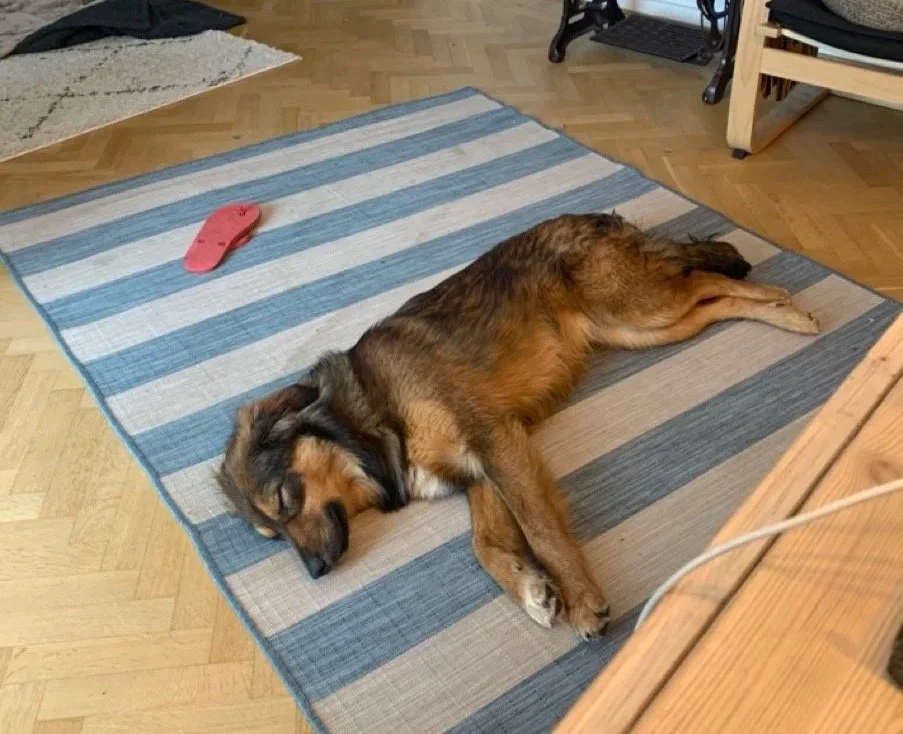
Respecting Independence and Choice
For dogs used to controlling their own movement, food, or rest, home life can feel restrictive.
Where possible:
Offer choices
Allow your dog to decide when to engage or rest
Provide safe spaces where they will not be disturbed
If your dog struggles with being left alone, seek professional support early. Separation-related behaviours are easier to address before they become ingrained.
Walking Your Rescue Dog
You do not need to walk your dog straight away.
Many dogs benefit from several days or even weeks of decompression before venturing into the outside world.
When you do start:
Use a secure, well-fitted harness
Avoid busy routes initially
Keep sessions short and positive
For dogs with a strong prey drive, recall training should always be built gradually using positive reinforcement before considering off-lead freedom.
Final Thoughts
Every rescue dog arrives with their own story. Some settle quickly. Others need time, structure, and support to feel safe.
What matters most is not doing everything perfectly, but being willing to listen, adapt, and meet the dog in front of you.
With patience, realistic expectations, and kind guidance, rescue dogs can and do go on to live deeply fulfilling lives. And for many adopters, the bond that grows from this journey is unlike any other.